
Nuts
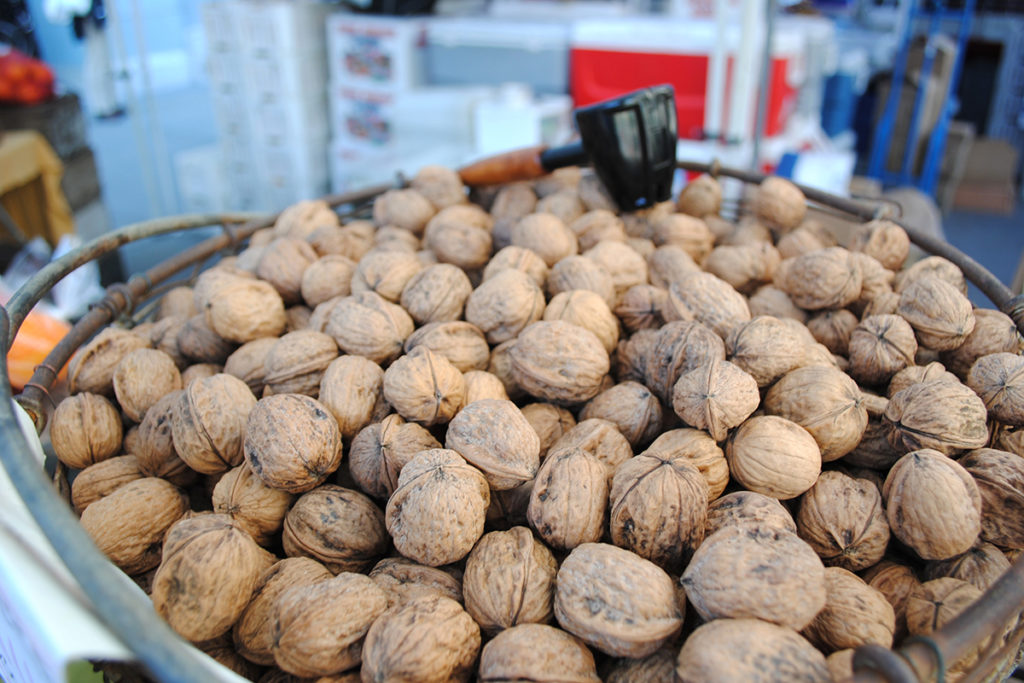
The term “nut” describes a wide range of dry, edible fruits and seeds, some of which are considered “nuts” only in the culinary sense, and others that are “true nuts.” True (botanical) nuts are dry, hard-shelled, uncompartmented fruit such as acorns, hazelnuts, and chestnuts. Common culinary “nuts” such as almonds, cashews, pistachios, and walnuts are actually fruit seeds, while peanuts belong in the legume, or bean, family. Since they are high in fat and protein content, it?s best to buy nuts whole and in-the-shell whenever possible. Avoid nuts that are broken or sliced, as they are more prone to rancidity. Many nuts are also a good source of vitamin E, essential fatty acids, calcium, phosphorous, magnesium, and potassium. At the Ferry Plaza Farmers Market, you can find almonds, chestnuts, peanuts, pecans, pistachios, and walnuts from various farms. For more information on specific nuts, see the Fruit and Nuts Seasonality Chart: http://foodwise.org/page/seasonality-chart-fruit-and-nuts